 June 28, 2026
  3 min read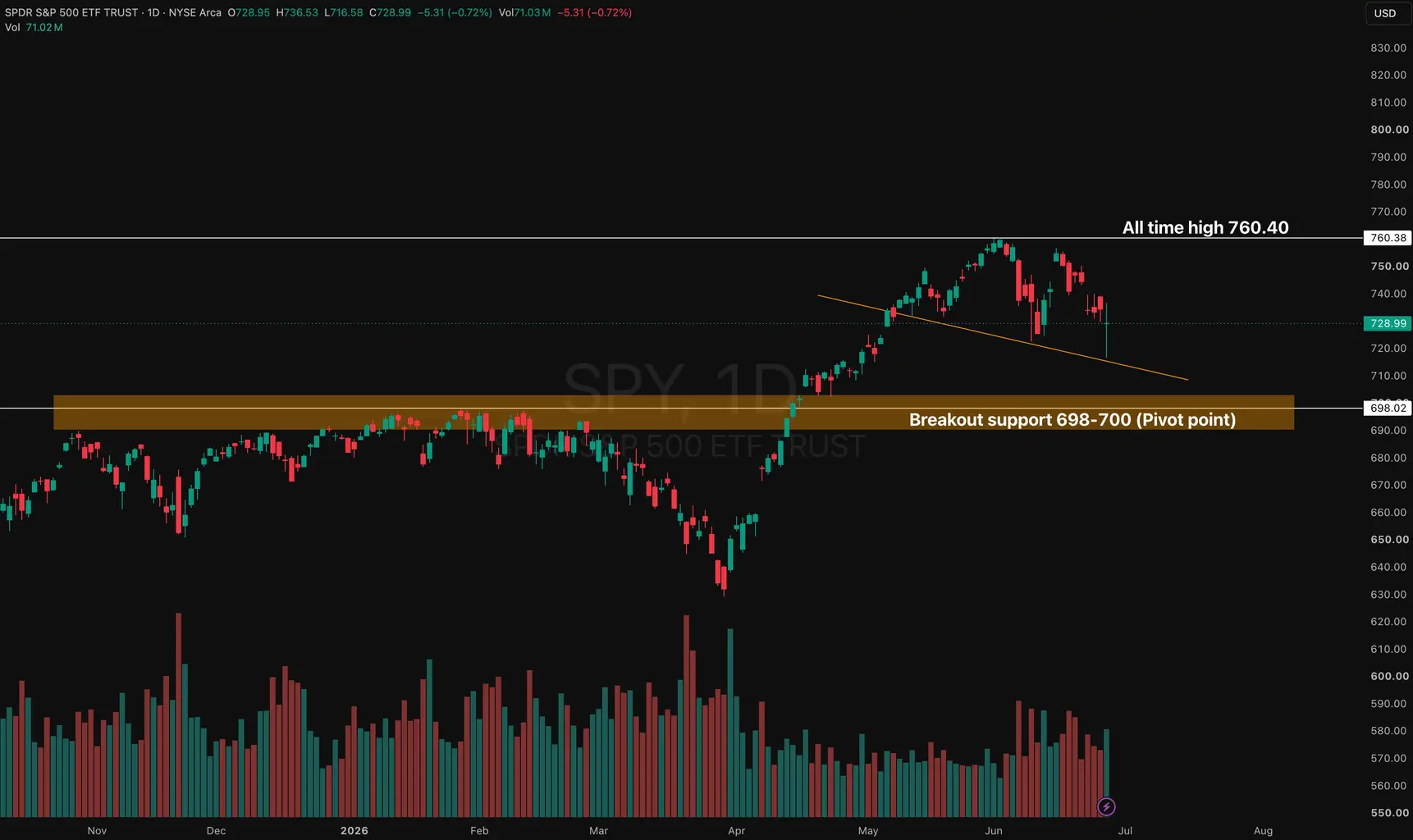
Headline names that led recent advances have eased causing some market participants to question the strength of the rally but overall leadership dynamics are shifting rather than collapsing.
The recent market advance is exhibiting a different character than the last decade when a handful of technology giants dominated gains. Over recent years several tech companies expanded to multi-trillion-dollar market caps and lifted broad indices such as the S&P 500 and Nasdaq 100 higher while that pattern was in place it was not broadly sustainable.
Market breadth describes how many individual stocks are participating in a rally. A narrow leadership profile allows indexes to climb even when many stocks beneath the surface are flat weak or declining.
That narrow leadership is beginning to give way to wider participation. Areas outside mega-cap technology are contributing more to overall market gains and small capitalisation segments have shown notable relative strength in recent sessions.
Investment vehicles that track small-cap benchmarks and small-cap value strategies have been running ahead of the S&P 500 in recent weeks. Small caps had lagged for an extended period due to higher interest rates tighter lending conditions inflationary pressure and concern about an economic slowdown.
When smaller companies begin to outperform larger names it is often viewed as evidence that investors are willing to extend capital beyond the dominant mega-caps. Index-level moves illustrate capital rotation while many market participants continue to research individual small and mid-cap firms for potential investment opportunities.
Key economic releases last week offered concrete data on domestic growth and inflation that help frame market responses.
- Q1 GDP expanded at a pace of 2.1% compared with estimates of 1.7%.
- The PCE Price Index increased 4.1% year over year which was in line with forecasts and higher than the prior month reading of 3.8%.
The combination of above-trend GDP growth and rising inflation highlights a growing economy with upward pressure on prices. That mix complicates the outlook for interest rate policy and influences relative performance across market sectors as rate-sensitive growth names reacted differently than more rate-resilient groups following the data.
A substantial portion of the recent inflation pickup has been tied to higher energy and gasoline prices which bears on how markets interpret the persistence of inflationary pressure.
The week ahead features several economic reports with a central theme on the U.S. labor market. Reported unemployment remains around 4.3% which is near historic lows and underscores continued resilience in employment despite headline challenges such as layoffs attributed to AI.
Market internals and economic prints together present a picture of broadened participation and mixed macro signals that market participants are digesting as they assess sector rotation and risk allocation.
This material is provided for informational and educational purposes only and does not constitute financial advice. All investments carry risk, including the potential loss of capital.








Feed