March 10, 2026
  2 min read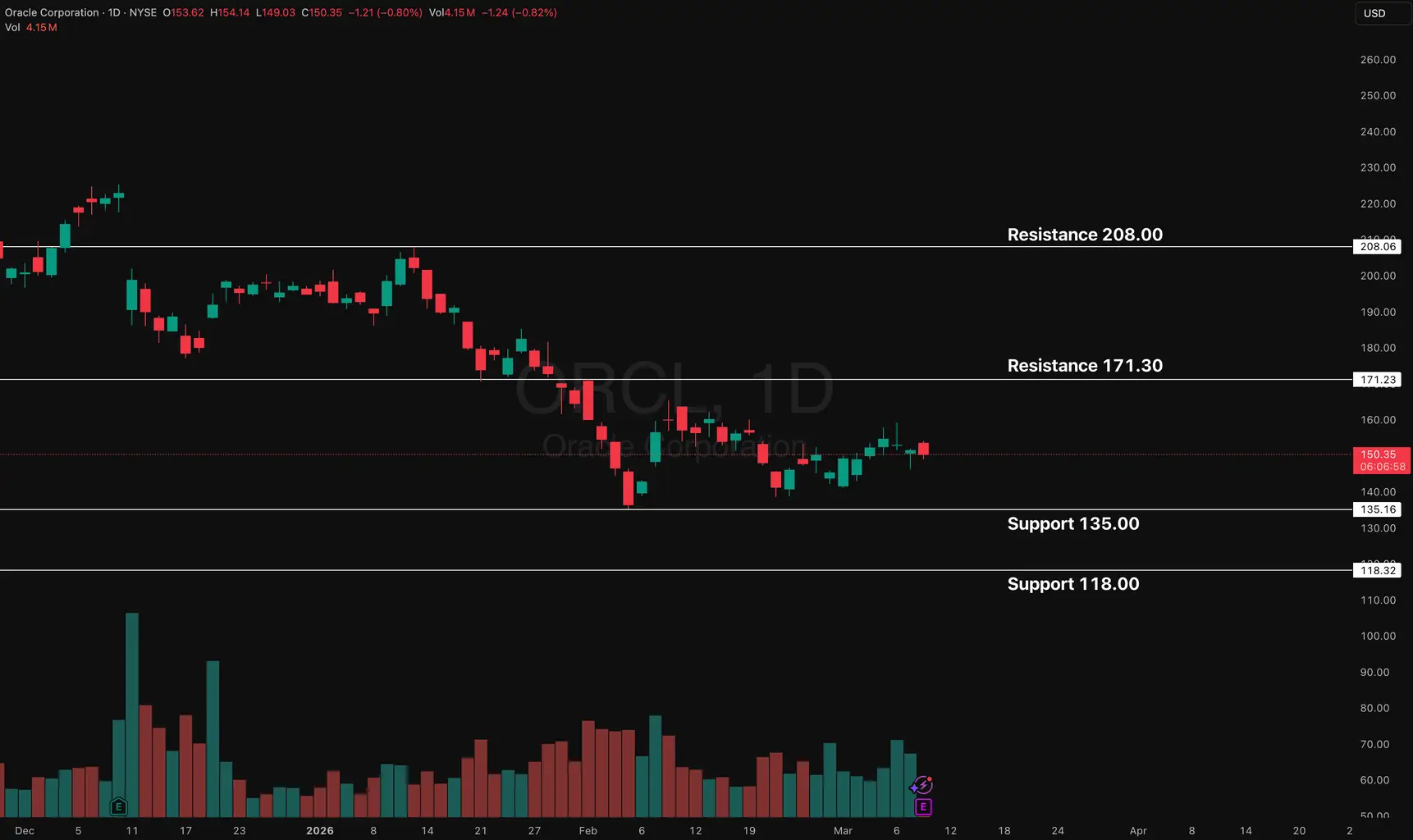
Oracle was among the earliest names to decline when the industrywide AI correction began in October. The stock has fallen by more than 50% from its recent highs over the span of a few months.
Earnings performance has remained solid and Oracle continues to occupy a significant position within the internet ecosystem. Management has been investing heavily to establish a larger role in the AI technology stack which has required substantial financing.
That spending has coincided with a negative free cash flow outcome; the company reported free cash flow of -$13 billion in the last quarter. At the same time Oracle's long term borrowing balances exceed $100 billion.
Capital expenditures jumped to $21.2B in 2025 from a prior level of $6.9B. Public commentary has indicated those outlays could increase further in the near term.
Oracle has been securing customer agreements with decade plus terms intended to underpin the returns on its infrastructure investments. The company positions those contracts as multi year revenue streams that will amortize the upfront build costs if demand for AI infrastructure remains.
On a simple price to earnings basis Oracle trades at 29x which is comparable to several large hyperscalers and platform providers named alongside it. By contrast Nvidia’s price to earnings ratio is 36x.
Options market measures show elevated implied volatility metrics. The ratio of implied volatility in calls to puts sits at 1.82. For the March 20 expiration the implied volatility reading registered at 97.75% which corresponds to an implied move near 19.70.
This material is provided for informational and educational purposes only and does not constitute financial advice. All investments carry risk, including the potential loss of capital.